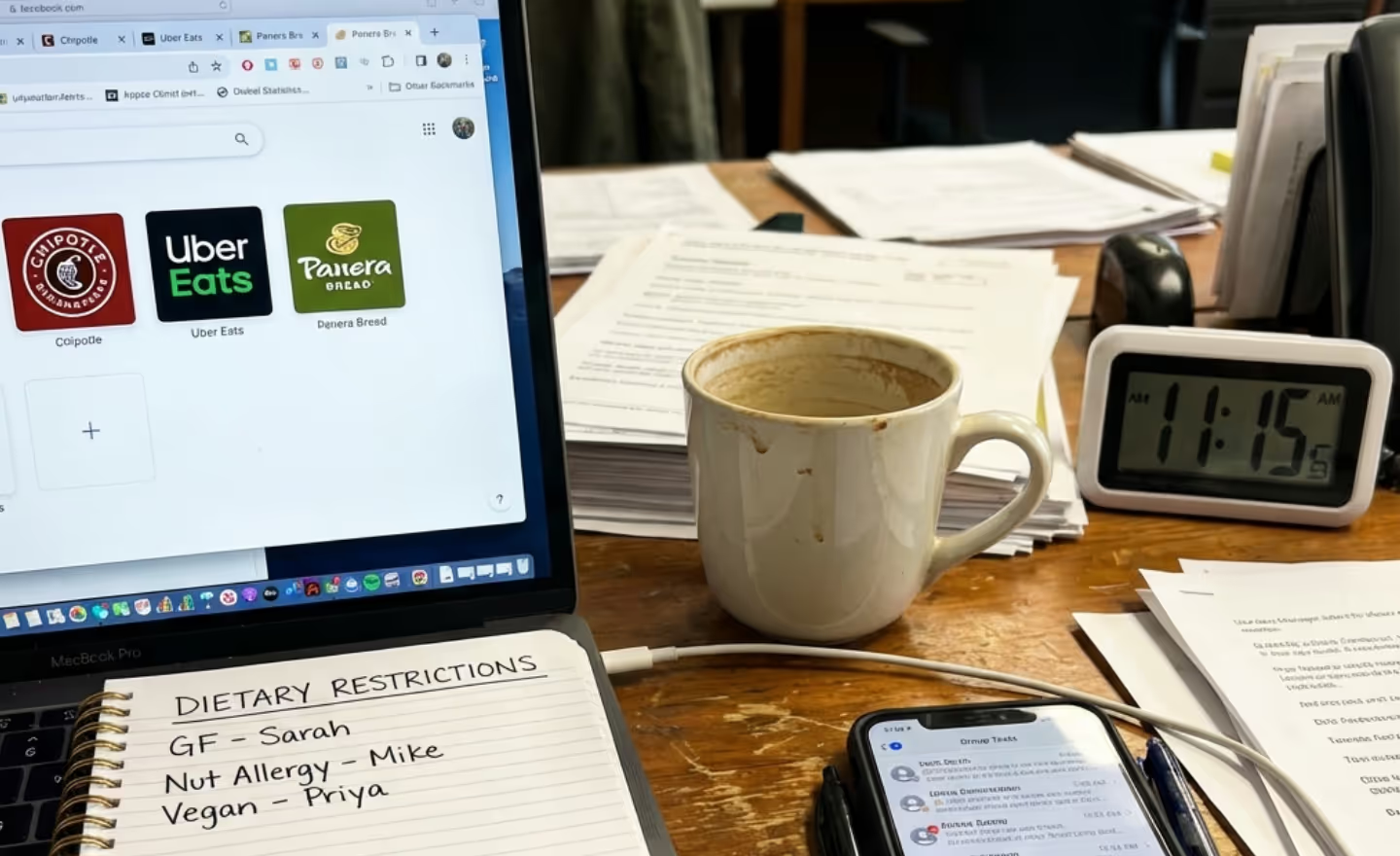
It’s 11:15 AM. You have a spreadsheet with 46 names, three different slack threads open, and a catering manager on hold telling you they are out of gluten-free buns again.
This is the "Pizza Paradox": The more you try to do something nice for your team (like buying lunch), the more of a logistical nightmare it becomes for you.
For years, "group meal ordering" meant compromising. You either ordered bulk trays of generic food that half the office couldn't eat, or you let everyone expense their own UberEats, creating a billing disaster for finance to reconcile later. Neither option scales. Neither feels right.
But the workplace has evolved, and so has the way we eat. It’s time to move away from the "tray of cold pasta" and toward Intelligent Group Ordering.
The 4 Hidden Costs of Traditional Catering
When companies stick to the old model of bulk ordering, they aren't just wasting food, they are wasting valuable time and energy. Here is the real cost of manual group ordering:
- The "Dietary Tax" (Admin Fatigue): Office Managers report spending an average of 1-2 hours per week just managing dietary restrictions and preferences. That is nearly a full workday lost to cross-referencing allergies with menus.
- The "Just in Case" Buffer: To ensure they don't run out, admins typically over-order by 20-30%. This results in hundreds of dollars of food waste every single week.
- The "Sad Salad" Syndrome: When you order bulk, employees with dietary restrictions often get the afterthought meal. This can mean a few unlucky souls get a plain side salad while everyone else eats the main course. This creates inclusion anxiety and subtle resentment.
- The Cold Truth: Large catering trays lose heat rapidly. By the time the meeting starts, the food is lukewarm. Individually packaged meals retain heat and quality far better.
What is "Intelligent" Group Ordering?
To rank as a modern solution, we need to redefine the category.
Group Meal Ordering is defined as a system where employees select their own meals from curated local restaurants, but the company retains strict control over the budget, delivery window, and drop-off logistics.
It bridges the gap between personal choice and corporate control. A true intelligent platform must offer:
- Subsidy Management: The ability to automatically apply a set allowance (e.g., "$25/person") that expires if unused.
- Unified Delivery: 50 individual orders arriving in one consolidated drop-off, rather than 50 separate delivery drivers cluttering your lobby.
- Labeling Logistics: Every bag is explicitly named and organized. No more "lunch theft" or opening containers to see what's inside.
Feature Spotlight: How Sharebite Solves the "Group" Problem
Sharebite was built to eliminate the friction of feeding teams. Here is how we operationalize the concept:
1. Sharebite Stations: Order from Chaos
Imagine a dedicated shelving unit in your office where food just... appears. With Sharebite Stations, orders are batched from top-rated local restaurants and organized on the station by name. Employees get a notification when their meal arrives, walk up, grab their bag, and go. No sorting, no searching.
2. Sharebite Passport: For the Hybrid World
Not everyone is in the HQ. Passport allows distributed teams or hybrid workers to use their meal allowance at any restaurant or eatery accepting Visa®, ensuring that your remote staff feels just as appreciated as your in-office team.
3. Mission-Driven Eating
Modern employees care about impact. Sharebite aligns with this by donating a meal to your local community for every meal ordered on the platform. Your lunch isn't just a perk; it's a social good.
Checklist: What to Look for in a Platform
If you are evaluating vendors, ensure they check these boxes to avoid future headaches:
- POS Integration: Does the platform sync directly with restaurant kitchens to prevent order errors?
- Slack/Microsoft Teams Integration: Can employees quickly be notified when it's time to order or know when their food arrives?
- Consolidated Billing: Do you get one clean invoice at the end of the month instead of thousands of receipts?
- Live Support: Is there a real human available instantly if a driver gets lost?
Stop Guessing, Start Automating
You didn't hire your Office Manager to be a professional food critic or a delivery dispatcher. Stop guessing what your team wants to eat. Let them choose, while you control the cost.
Ready to streamline your lunch program? Book a demo to see Sharebite Stations in action.
FAQ: Common Questions About Group Meal Ordering
How do you handle dietary restrictions for large groups?
We remove the burden from the admin. The platform filters menus individually for each user. An employee with Celiac disease will only see safe, gluten-free options when they log in.
Is group ordering cheaper than traditional catering?
Yes, typically by 15-20%. You eliminate the "buffer" food cost (food waste) and gain individual customization options.
How does delivery work for 100+ employees?
Orders are batched by the restaurant and routed to a designated "drop-off station" within your office. This ensures simultaneous arrival without friction.